

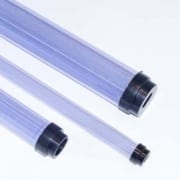
Have you ever heard that lighting changes moods? Or better yet have you felt you mood change from one room to the next? Scientist have considered the implications of these mood changes, and put conventional lighting to the test.
Lighting Changes Moods
Just in the last five years, we’ve truly began to realize the importance of lighting color temperatures and there effects on human perception and mood. In this article, by Lacey Muszynski, lighting quality metrics include color temperature, glare and lighting contrast. Color temperature is measured in Kelvin, for example, incandescent bulbs have a color temperature of 2,800K, which gives off a reddish glow most consider warm and inviting. “Typical fluorescent lighting ranges between 3,500K and 4,100K, much cooler on the spectrum. That’s why occupants generally perceive fluorescent lighting in offices to be cold, clean or harsh.”
Fluorescent lighting can be found everywhere, from commercial spaces to residential, and for good reason. They are the most energy efficient and cost efficient lighting solution available. The problem, lies in the color temperature, glare and contrast emitted by the bulbs, and the UV radiation if not properly covered.
Health Risks and Fluorescent Lighting
A common symptom of many auto-immune diseases, is sensitivity to UV exposure on the skin. Patients diagnosed with the auto-immune disease Lupus Erythematosus, which represents 1.2 million of the U.S population, have to experience the worst symptoms when exposed to UV radiation from fluorescent lighting.